

There’s a unique magic to Richmond’s historic architecture. From the cobblestone streets of Shockoe Bottom to the grand facades of The Fan, these buildings are storytellers. But what story do they tell when they’re slated for renovation? More importantly, what secrets are hidden behind their century-old plaster?
The renovation of a (hypothetical) storied brick schoolhouse in the Carver neighborhood was meant to be a triumph of adaptive reuse—a project blending historic charm with modern utility. The vision was clear, but the reality? It was saturated.
The Ambitious Vision vs. The Damp Reality
On paper, the project was straightforward: convert an early 20th-century school into modern loft-style apartments, preserving the original hardwood floors, towering windows, and pressed-tin ceilings. The developers planned for common challenges: asbestos abatement, lead paint, and updating knob-and-tube wiring.
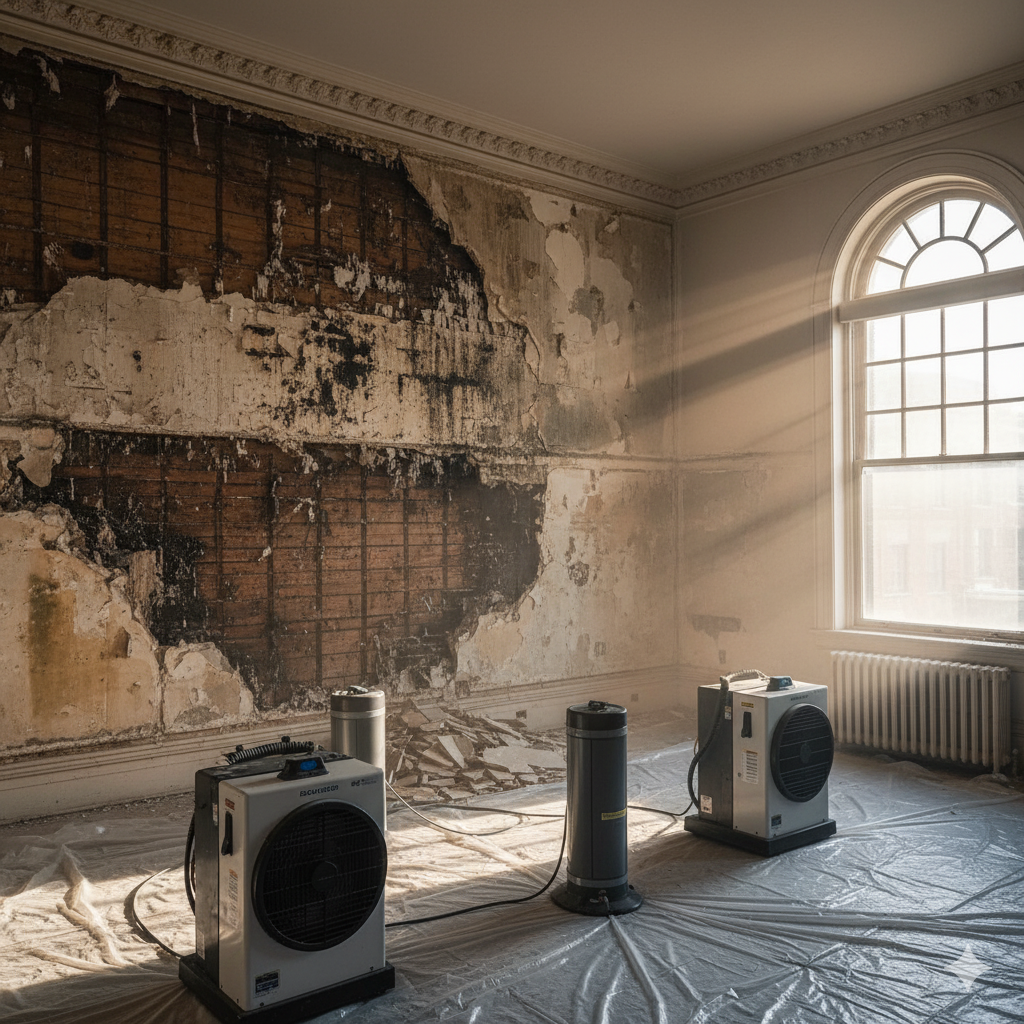
But what do you do when the demolition crew pulls back a wall section and is met not with solid brick, but with the musty smell of advanced decay?
Uncovering a Decades-Old Crisis: The Water Damage Component
The renovation screeched to a halt. A decades-old, slow leak from a compromised roof flashing and failing cast-iron plumbing had been silently saturating the building’s core. This wasn’t just a stain; it was a systemic failure.
The crew had uncovered:
- Widespread, hidden black mold (Stachybotrys) behind walls and above ceilings.
- Water-compromised structural beams, threatening the building’s integrity.
- Saturated plaster and insulation, which had trapped moisture and created a perfect breeding ground for decay.
This discovery changed everything. The project was no longer just a renovation; it was a high-stakes restoration. This is where specialized expertise becomes non-negotiable.
Why Is Water Damage in Historic Buildings So Dangerous?
In a modern building, you rip out the drywall and replace it. But in a historic property, the stakes are infinitely higher. How do you solve the problem without destroying the very character you’re trying to save?
The dangers are threefold:
- Structural Failure: Old-growth timber beams and lime-based mortar were not designed to be perpetually wet. Water leads to rot and crumbling, turning load-bearing elements into liabilities.
- Hazardous Material Disturbance: Water damage can disturb materials like asbestos-laden insulation or lead paint, making them friable and releasing harmful particles into the air.
- Health Hazards: Mold isn’t just unsightly. It releases mycotoxins that can cause severe respiratory issues, making the building uninhabitable.
The Restoration Playbook: A Modern Approach to an Old Problem
Tackling a crisis of this magnitude requires a surgical approach. This isn’t a job for a standard contractor; it demands specialists who understand the unique science of water damage restoration, especially in delicate, historic contexts.
Phase 1: Advanced Assessment & Containment
Before a single tool was lifted, the first step was diagnostics. Using non-invasive tools like infrared cameras and moisture meters, a restoration team (like the experts at APS Flood Restoration) can map the full extent of the water’s travel. This prevents “missing” a spot that could re-contaminate the building years later. The area was then sealed off with negative air pressure containment to prevent cross-contamination.
Phase 2: Targeted Remediation & Structural Drying
This is where expertise truly matters. The team didn’t just spray bleach.
- Safe Removal: All non-salvageable materials, including saturated plaster and contaminated insulation, were carefully removed following IICRC and EPA guidelines.
- Mold Remediation: A thorough, multi-step process involving HEPA vacuuming, antimicrobial treatments, and sealing (encapsulating) surfaces to ensure mold spores were neutralized.
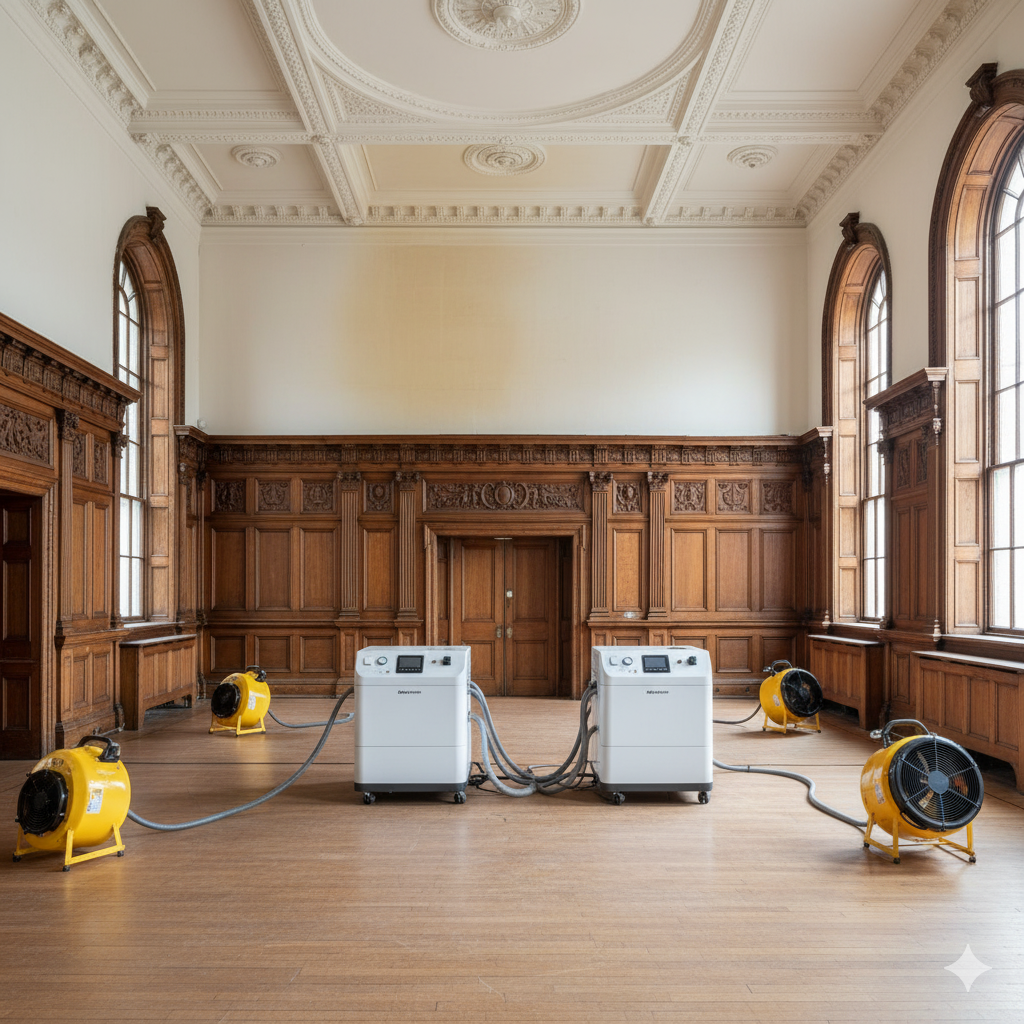
- Specialized Drying: You can’t aim high-heat blowers at 100-year-old wood; it will crack and warp. The team used low-grain refrigerant dehumidifiers and targeted air movers to slowly and safely bring the building’s core back to an acceptable moisture level, preserving the historic materials.
Phase 3: Restoration & Preservation
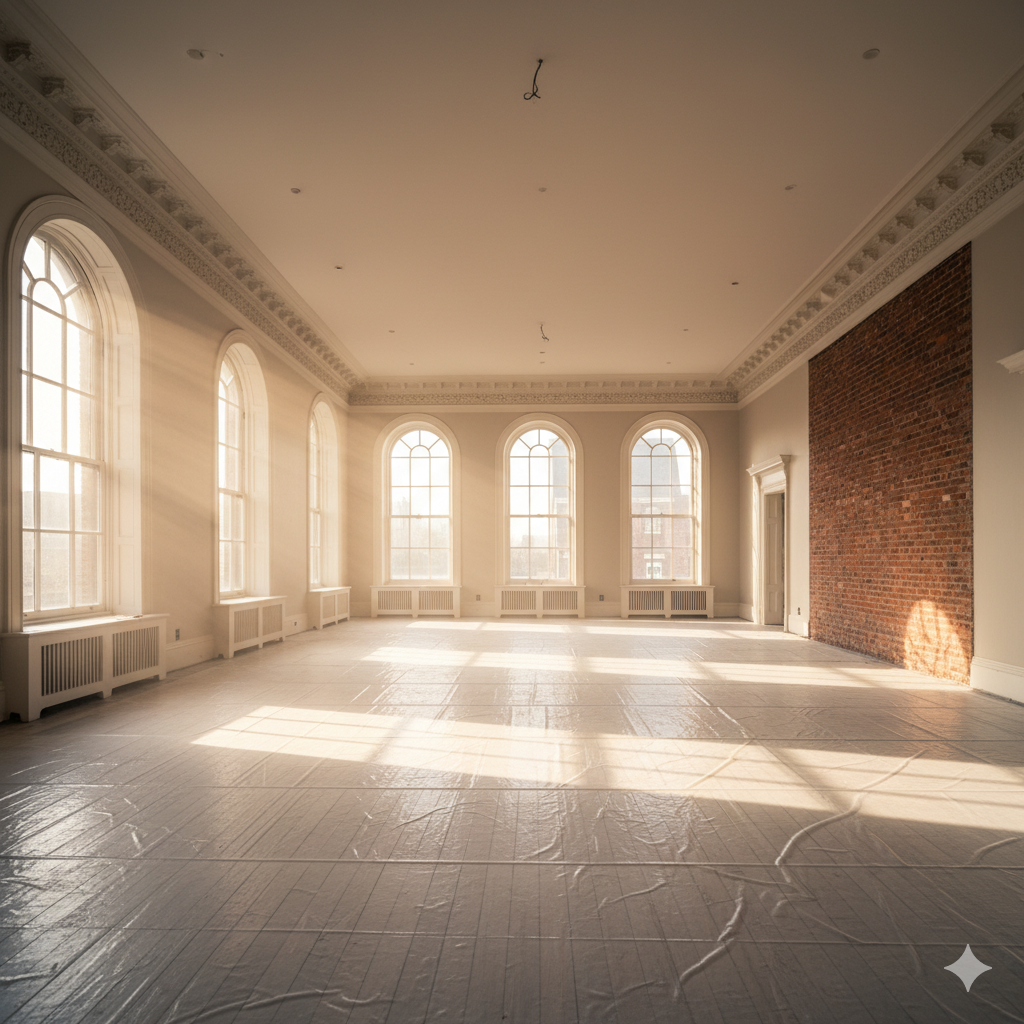
With the building certified as dry and safe, the restoration team worked with historic preservation consultants. They integrated modern vapor barriers and flashing improvements to ensure the problem would never return, all while preparing the original surfaces for the renovation to finally resume.
Critical Insights from the Richmond Renovation
This case study provides a powerful lesson for any developer, property manager, or homeowner tackling an older building in Richmond:
- Water Is the X-Factor: Always factor a significant contingency for unforeseen water and mold issues. It’s the most common and costly surprise in historic renovations.
- Don’t “Wait and See”: A musty smell is not “old building charm”; it’s a red flag. Addressing it early saves hundreds of thousands in the long run.
- Hire Specialists, Not Generalists: A flood restoration company understands the building science of moisture. A general contractor may only fix the visible symptom, not the underlying disease.
Is Your Project Hiding a Costly Secret?
Are you planning a renovation? Do you manage an older property with persistent dampness or musty odors? Ignoring the signs of water damage is a gamble you can’t afford to lose. Before your small problem becomes a structural crisis, get a professional assessment.
