

The Facility Manager’s Dilemma
Is there a worse feeling than walking into your facility on a Monday morning to hear the squish of water under your shoes? Whether it is a burst pipe on the third floor or storm runoff flooding the lobby, seeing your commercial carpeting submerged triggers an immediate, panicked calculation: How much is this going to cost? How long will we be offline? And most importantly, do I have to rip all of this out?
In the high-stakes world of commercial property management, the decision to restore or replace isn’t just about aesthetics—it’s about asset management, health safety, and the bottom line. Before you make a rash decision, ask yourself: is salvation possible?
Assessing the Damage
Not all water damage spells the end for your flooring. The viability of restoration depends heavily on the “Three T’s”: Type of water, Time elapsed, and Type of installation. How do you know where you stand?
1. What Kind of Water Is It?
Are you dealing with clean water or something worse? This is the first question our experts at APS Flood Restoration ask.
- Category 1 (Clean Water): Water from a broken supply line or sink overflow. If treated within 24-48 hours, this carpet is highly salvageable.
- Category 2 (Grey Water): Water containing chemicals (like dishwasher discharge). Pad replacement is usually mandatory, but the carpet might be saved with aggressive cleaning.
- Category 3 (Black Water): Sewage or floodwaters from outside. Stop immediately. For the safety of your occupants, this usually requires total replacement.
2. The “Repair vs. Replace” Matrix
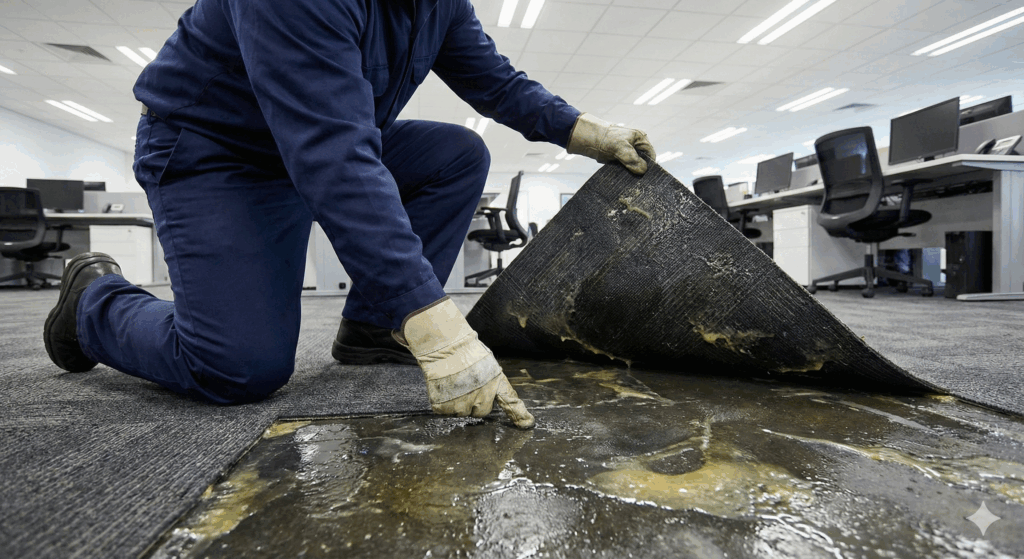
Have the carpets been wet for more than three days? If yes, mold spores have likely already colonized the backing. However, if you catch it within 24 hours, the math changes in your favor.
Consider your installation type. Is your facility using glue-down carpeting (common in offices)? This is often easier to salvage because there is no pad to sponge up water. However, if the water degrades the adhesive, you may face “bubbling” or delamination later, where the secondary backing separates from the primary backing.
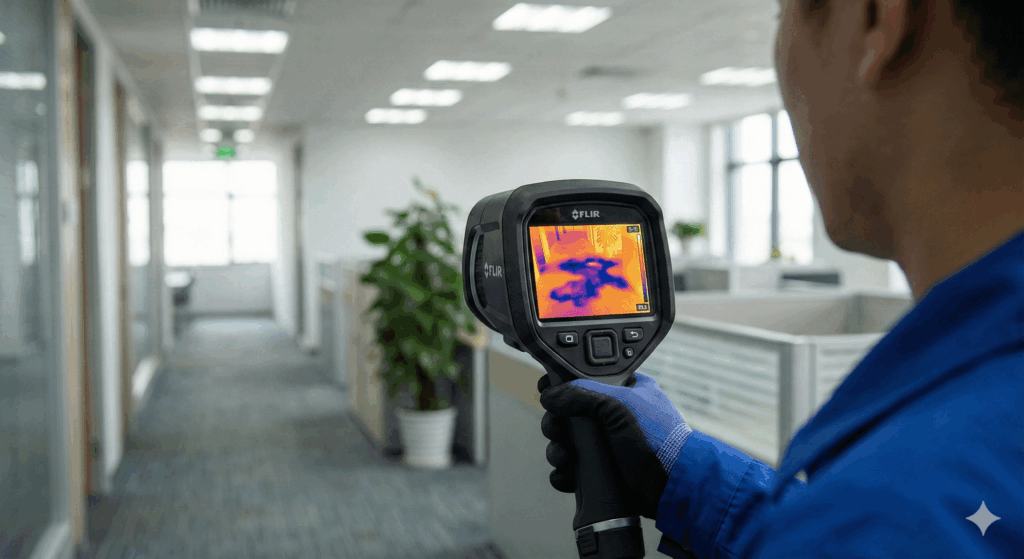
Why is professional extraction non-negotiable? Surface drying with a shop vac leaves moisture trapped in the subfloor. Professional restoration involves thermal imaging to locate hidden moisture pockets and industrial-grade dehumidifiers to pull moisture from the air, preventing secondary damage to walls and furniture.
Frequently Asked Questions (FAQs)
Q: How long can wet commercial carpet sit before it is ruined? A: The “Golden Window” is typically 24 to 48 hours. After 72 hours, the risk of mold growth and delamination increases exponentially, often necessitating replacement.
Q: Will water damage cause my carpet tiles to peel up? A: It can. If the adhesive is water-soluble, the bond may break. However, commercial-grade adhesives are often resilient if dried quickly by professionals.
Q: Can’t I just use fans to dry the floor? A: Standard box fans are rarely enough. They dry the surface but not the subfloor (concrete or wood). Trapped moisture underneath will eventually wick back up or cause mold.
Conclusion
So, can it be saved? If it is Category 1 water, caught early, and professionally extracted, the answer is often a resounding yes. You can save thousands in capital expenditure by choosing restoration over replacement. However, guessing is expensive. If you are unsure about the water source or the timeline, do not gamble with your building’s health.
Facility Manager’s Emergency Checklist
If you discover water damage, follow these steps immediately while waiting for the pros:
- ✅ Identify the Source: Shut off the main water valve if it is a plumbing issue.
- ✅ Safety First: Turn off electricity to the affected area to avoid shock hazards.
- ✅ Clear the Area: Move furniture or place aluminum foil tabs under legs to prevent rust stains.
- ✅ Document Everything: Take photos and video for insurance purposes before cleanup begins.
- ✅ Call the Experts: Contact APS Flood Restoration for immediate extraction.
Our Service Area
We provide rapid response flood restoration across the region. Find us here:
https://maps.app.goo.gl/RU4uzdHX63cvrfcBA
