
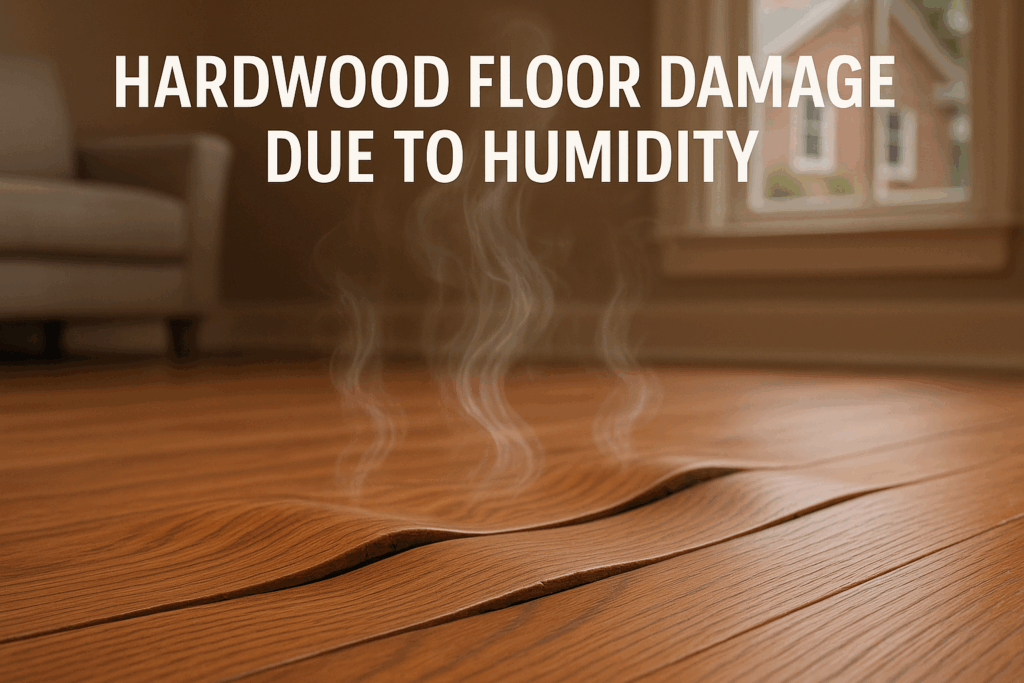
As a homeowner in the DC, Maryland, or Virginia (DMV) area, you understand our unique climate. We love the distinct seasons, but that notorious, swampy summer humidity followed by dry winters can be brutal—not just on us, but on our homes. If you’ve looked down and wondered, “Why are my expensive hardwood floors starting to warp?” or “Why are there sudden gaps between my floorboards?” you are not alone.
This isn’t just a cosmetic issue; it’s a structural one. And the culprit is almost always moisture. But is it the everyday air, or something more serious? Let’s investigate.

What’s Actually Happening to My Wood Floors?
Think of your hardwood floors as a living, breathing part of your home. Wood is hygroscopic, which is a scientific way of saying it naturally absorbs and releases moisture from the air to match its environment.
- When humidity is high (hello, DMV summers), wood absorbs moisture and expands.
- When humidity is low (like when the heat is blasting in winter), wood releases moisture and shrinks.
This constant cycle of expansion and contraction is the root cause of most floorboard issues, leading to three common problems: gapping, cupping, and crowning.
Gapping, Cupping, and Crowning: Identifying the Problem
While often related, these terms describe different symptoms. Knowing which one you have helps diagnose the cause.
What is Hardwood Floor Gapping?
Gapping is exactly what it sounds like: visible, unsightly spaces that appear between your floorboards. This is most common in the winter. The dry, heated air sucks the moisture from the wood, causing the planks to shrink. In many cases, these gaps will close up again when the humidity returns in the summer.
What is Hardwood Floor Cupping?
Cupping is the classic sign of a moisture imbalance. This happens when the bottom of the floorboard is wetter than the top. The moisture absorption causes the edges of the plank to swell and rise, while the center stays put, creating a concave “cup” shape.
In the DMV, this is often caused by:
- Extreme summer humidity.
- A damp crawlspace or basement with moisture rising from below.
- A slow, undetected plumbing leak.
- Improperly cleaning the floor with excess water.
What is Hardwood Floor Crowning?
Crowning is the opposite of cupping. The center of the board is higher than the edges. This is less common but often happens after a cupping problem. If someone tries to fix cupped floors by sanding them flat before the wood is fully dried, the edges (which were higher) get sanded down. When the wood finally dries and settles, the edges sink lower while the center remains high, creating a convex “crown.”
When Is It More Than Just Humidity?
Seasonal gapping and minor cupping might be normal for our region. But when is it a sign of a critical problem?
You should be concerned if the cupping or gapping is:
- Sudden: Did it appear almost overnight?
- Localized: Is it happening intensely in one spot (e.g., near a dishwasher, ice maker, or bathroom)?
- Severe: Are the boards buckling, lifting, or “tenting”?
- Persistent: Does it fail to resolve when the seasons change?
These are red flags for active water damage. A hidden pipe leak, a cracked foundation, or a past flood that wasn’t properly dried can all trap moisture under your floors, leading to serious structural damage and mold growth.
Your Restoration Solution: What Can Be Done?
If you suspect water damage, do not wait. The problem will only get worse. While a simple dehumidifier can help with ambient humidity, it can’t fix a saturated subfloor.
At www.apsfloodrestoration.com, we’ve seen every type of floor damage this climate can cause. A professional restoration process doesn’t just treat the symptom; it cures the disease.
The solution involves:
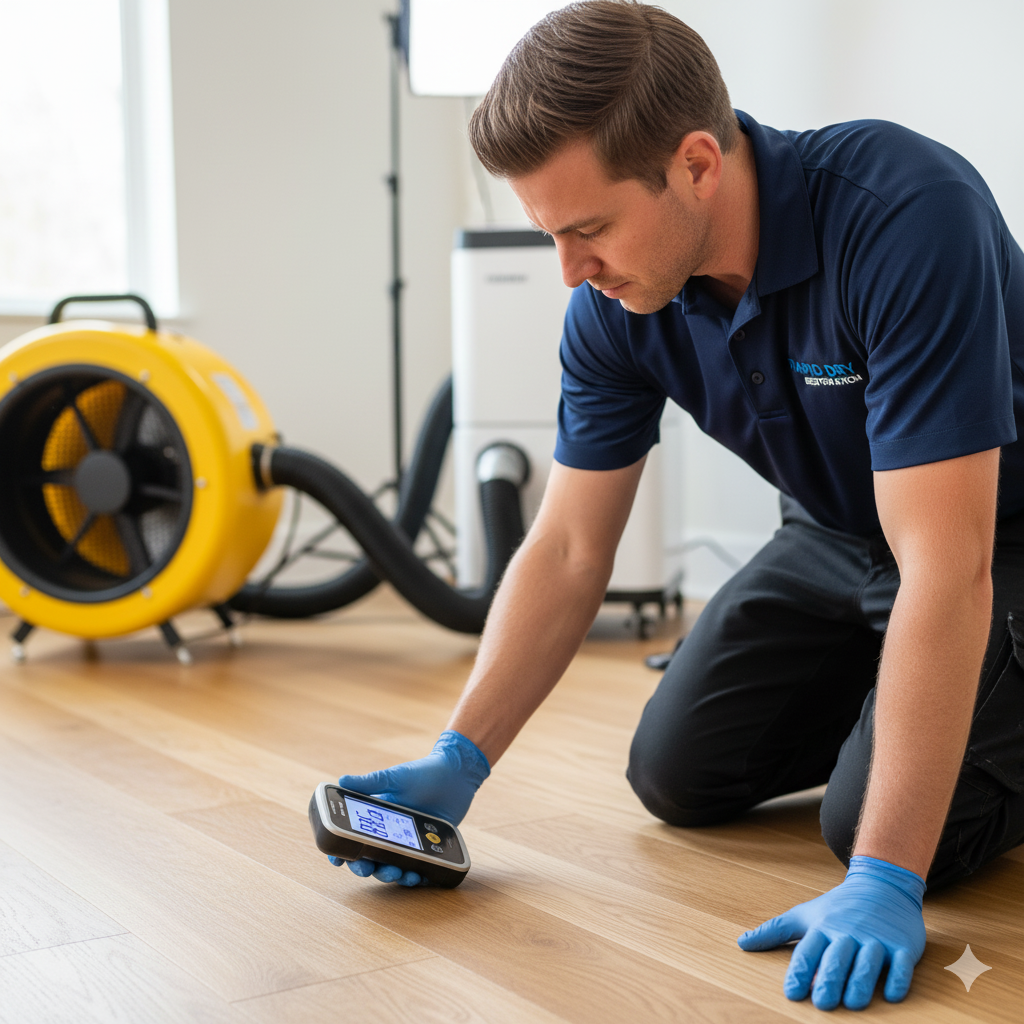
- Moisture Detection: Using specialized meters to find the exact source and extent of the water.
- Professional Drying: Deploying high-powered air movers and dehumidifiers to remove all moisture from the wood and subfloor.
- Repair and Restoration: Once verifiably dry, our experts can assess the next steps. This may involve sanding and refinishing the existing boards or, in severe cases, replacing the damaged sections.

Essential Insights for DMV Homeowners
Here are the crucial takeaways to protect your investment:
- Know Your Foe: Humidity is the main enemy of hardwood floors in the DMV.
- Identify the Symptom: Gapping (gaps) = too dry. Cupping (concave) = too wet, often from below. Crowning (convex) = often a sign of a previous, improper repair.
- Don’t Sand a Wet Floor: Never try to sand cupped floors flat. You must address the moisture source first, or you will create crowning.
- Act Fast on Water: If you suspect a leak or flood, call a professional 24/7. The faster you get the water out, the more likely you are to save your floors.
Don’t Let Warping Win: Reclaim Your Floors
Your hardwood floors are one of the most valuable features of your home. Don’t let humidity or hidden water damage ruin them. If you see the warning signs, it’s time to call in an expert who understands the unique challenges of the DMV climate.
