
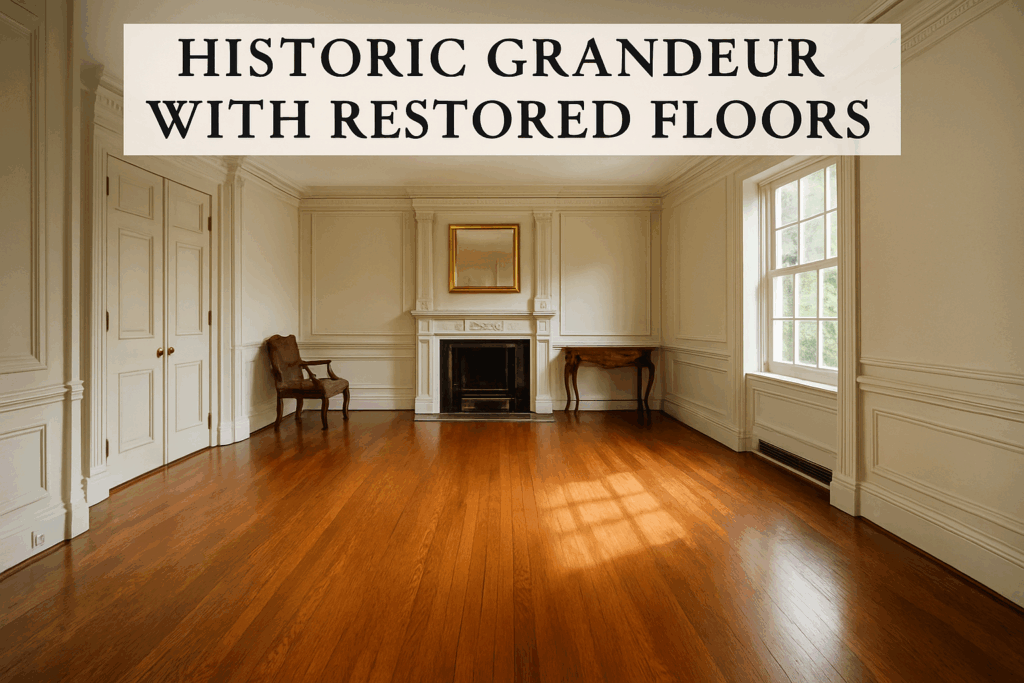
The hardwood floors in your historic Alexandria or Georgetown home aren’t just a surface; they are the foundation of its character. They hold the echoes of history, and the thought of restoring their glow is exciting. But before you call in a standard sanding crew, stop. Refinishing pre-1950s hardwood is an art of preservation, not a simple cosmetic fix. Asking the right questions can mean the difference between restoration and irreversible damage.
So, what separates a respectful restoration from a modern remodel? It’s all in the details.
5 Crucial Questions for Your Historic Floor
- Is It Valuable Patina or Just Damage?
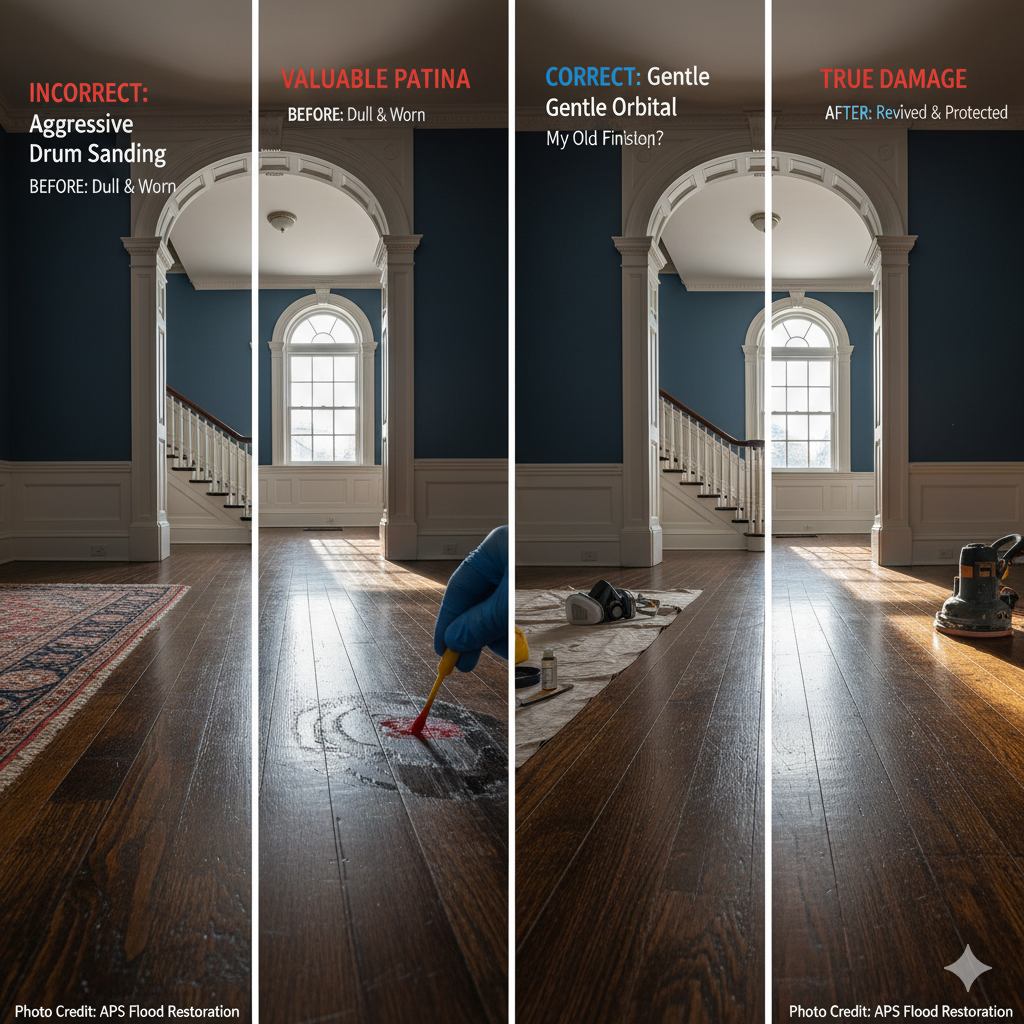
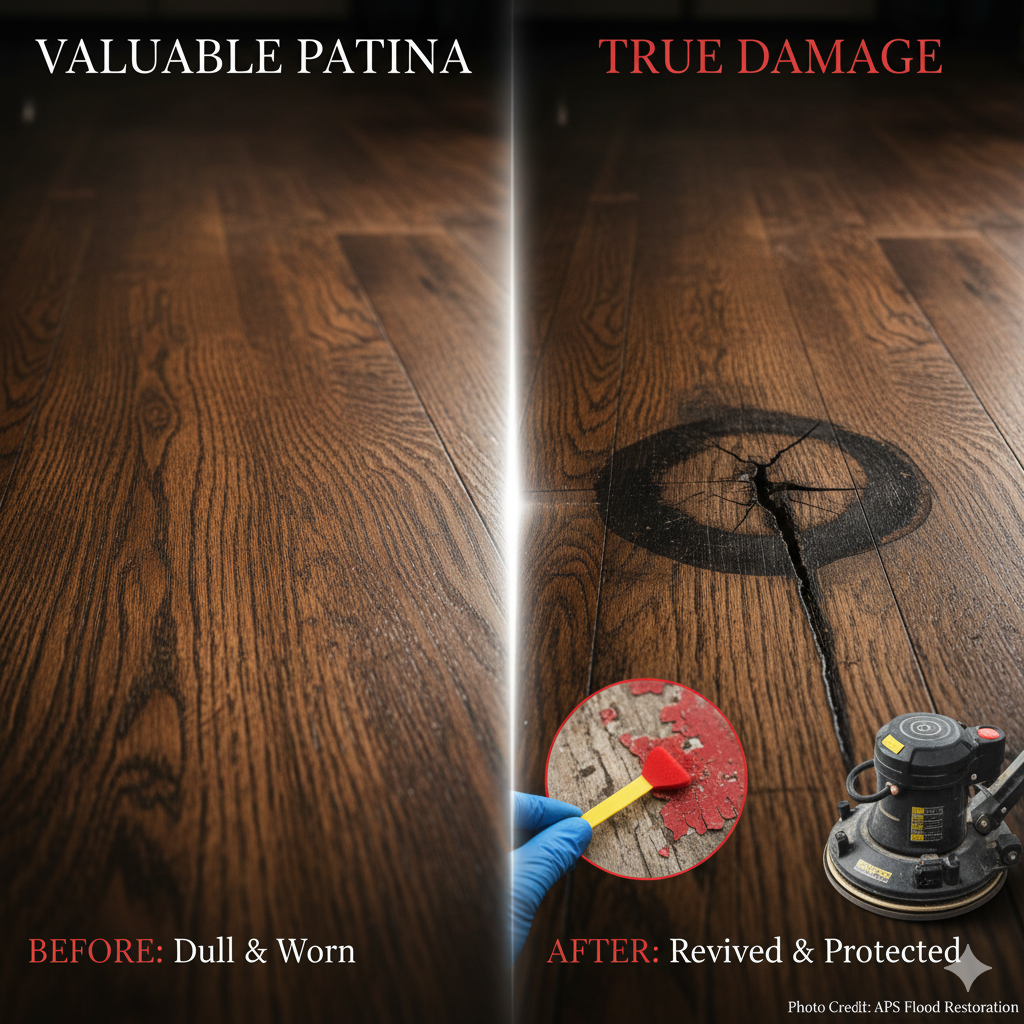
In a historic home, not all imperfections are flaws. That subtle shading and micro-pitting? That’s patina, the gentle wear that gives old wood its unmatched warmth and character. A heavy-handed sander will erase this history forever. A true restoration expert can distinguish this valuable patina from actual damage—like water stains, deep gouges, or warping—and create a plan that addresses the damage while preserving the character.
- Can We Even Match These Original Planks?
Have you ever wondered why your floors look so different from new installations? Pre-1950s homes often feature wood that is virtually impossible to find today. This includes:
- Old-growth timber: Wood harvested from mature, dense trees, giving it superior stability and grain.
- Unique species: Think true heart pine, American chestnut, or quartersawn oak in widths you can’t buy at a big-box store.
If boards are missing or damaged beyond repair, a specialist is required. We often source matching planks from reclaimed lumberyards or specialty mills to ensure a seamless, historically accurate repair.
- What Hidden Risks Lie Beneath Old Finishes?
The layers of finish on your floors are a timeline. Unfortunately, that timeline can include hazardous materials. Older homes may have finishes or adhesives that contain:
- Lead (common in paints and some varnishes pre-1978)
- Asbestos (sometimes found in old vinyl backing or adhesives)
A professional assessment is crucial. An expert will know the proper, safe procedures for testing and handling these materials without endangering your family or the restoration team, ensuring your project is both beautiful and safe.
- Will Modern Sanding Destroy My Old Wood?
The short answer? Yes, if done improperly. Aggressive drum sanders, which are standard for many contractors, can be disastrous for old floors. They can:
- Remove too much wood, shortening the floor’s remaining lifespan.
- Create “chatter” marks or divots in softer, old-growth pine.
- Flatten the hand-scraped or time-worn texture that makes the floor unique.
Specialized techniques, like using multi-disc orbital sanders and a meticulous, gentle approach, are essential to protect the integrity of the wood.
- Is a Full Sand-Down Even the Right Choice?
Before you commit to a full refinish, ask this: do we really need it? For many historic floors, the answer is no. A full sand-down should be the last resort. Often, the floor’s original character can be revived with more delicate methods, such as:
- Professional Deep Cleaning & Buffing: Removing decades of built-up wax and grime.
- Screening (Buff and Recoat): This lightly abrades the top finish without touching the wood, allowing a fresh coat of polyurethane or oil to be applied.
These methods preserve the original wood and its patina, extending its life for decades more. For a deeper dive into floor preservation techniques, resources like This Old House offer great insights.
Your Pre-Restoration Checklist
Before you begin any project, use this checklist to guide your conversation with a restoration professional:
- ✅ Assess the “Damage”: Have you identified what is true damage versus valuable historical patina?
- ✅ Identify the Wood: Do you know the species and age of your flooring?
- ✅ Source Replacement Boards: If needed, do you have a source for period-appropriate reclaimed wood?
- ✅ Test for Hazards: Has the floor been tested for lead or asbestos by a qualified professional?
- ✅ Confirm the Method: Has the contractor confirmed they will use gentle, low-impact methods (like orbital sanders) instead of aggressive drum sanders?
- ✅ Explore Alternatives: Have you discussed lighter options, like a professional buff and recoat, before committing to a full sanding?
Frequently Asked Questions (FAQs)
Q: What’s the difference between refinishing and screening?
A: Refinishing (or a “sand and refinish”) involves sanding the floor down to the bare wood to remove all scratches, stains, and the old finish, then applying new stain and protective coats. Screening (or a “buff and recoat”) is a much less invasive process. It involves lightly abrading—or “screening”—only the top layer of polyurethane finish and applying a fresh coat. It’s perfect for floors that are dull but not deeply damaged, and it preserves the original wood and patina.
Q: How do I know if my pre-1950s floors have lead or asbestos?
A: You cannot tell just by looking. Lead was a common component in paint and some varnishes before 1978, and asbestos was used in some adhesives and backing materials. The only way to know for sure is through professional testing. A certified restoration expert will insist on testing before any sanding, as the dust can be extremely hazardous.
Q: My historic floor has a dark water stain. Can it be saved without full refinishing?
A: It depends on the severity. Light stains that are only in the finish can often be buffed out. Deeper, dark-gray or black stains mean water has penetrated the wood fibers themselves. Sometimes, these can be treated, but often the board(s) may need to be carefully replaced. As restoration experts at APS Flood Restoration, we specialize in “board surgery” to seamlessly replace damaged planks with period-matched lumber.
Our Service Area
We proudly serve high-value historic properties throughout the Northern Virginia and D.C. area, with specialized expertise in the unique homes of Alexandria and Georgetown. We understand the specific architectural guidelines and preservation needs of these communities.
Conclusion: Your Home Deserves a Restoration Expert
Refinishing floors in a home in Alexandria or Georgetown is not a DIY weekend project, nor is it a job for just any contractor. It’s a specialized task that requires a deep respect for history and a craftsman’s touch. You need a partner who understands preservation.
At APS Flood Restoration, we don’t just refinish floors; we restore them. We specialize in handling the unique challenges of historic properties, ensuring your home’s legacy is protected for the next generation.
