

Choosing between carpet tile and vinyl flooring is one of the most common decisions in a commercial flooring project. Both materials are widely used in offices, healthcare spaces, education environments, reception areas, and other business interiors.The difference is where they work best.
That is why this comparison matters. The goal is not to decide that one material is always better than the other. The goal is to understand which one makes more sense for the type of commercial space being updated.
In Arlington, VA, many commercial flooring projects involve a mix of needs. Some areas need comfort and sound control. Others need durability and easier maintenance. Some need a cleaner, more structured finish. That is where the choice between carpet tile and vinyl becomes more practical than theoretical.
What is the main difference between carpet tile and vinyl?
The main difference is what each material does best in a commercial environment.
Carpet tile is usually the stronger choice when comfort, acoustics, and a softer interior feel matter more. Vinyl flooring is usually the stronger choice when durability, simpler upkeep, and a harder-wearing surface matter more.
That does not mean one should always replace the other. It means each material serves a different purpose. A workspace may benefit from carpet tile. A corridor may perform better with vinyl. A reception area may go either way depending on how the space is used and what kind of finish the business wants.
When does carpet tile make more sense?
Carpet tile usually makes more sense in commercial spaces where comfort and sound control are important.
This is one reason it is so common in offices. Shared workspaces, private offices, meeting rooms, and conference spaces often benefit from a material that makes the environment feel quieter and more comfortable. In open office settings, that difference can be noticeable. A softer floor can help the space feel more controlled and less harsh.
Carpet tile also works well when the business wants a more finished and less rigid look. Some commercial interiors need that softer visual effect, especially in spaces where people spend long periods of time working or meeting.
When is vinyl flooring the better choice?
Vinyl flooring is often the better choice in areas that need a more durable and easier-to-manage surface. That includes many hallways, reception zones, entry points, check-in spaces, and other areas that see steady movement throughout the day. In those parts of a commercial property, the floor needs to hold up under regular traffic and maintain a clean appearance without becoming difficult to maintain.
Vinyl is also a strong choice when the property wants a cleaner-lined and more structured finish. In some commercial interiors, that visual style works better than a softer material.

What works better in office spaces?
In many offices, both materials can work well, but they usually work best in different parts of the layout.
Carpet tile is often a stronger option in workspaces, meeting rooms, and collaborative interiors because it helps reduce noise and supports a more comfortable environment.
Vinyl flooring often works better in reception areas, corridors, break zones, and entry points where traffic is higher and simpler maintenance matters more.
That is why many office projects use both. The strongest office flooring plans often do not choose one material for the entire property. They use carpet tile where comfort and acoustics matter, and vinyl where traffic and upkeep matter more.
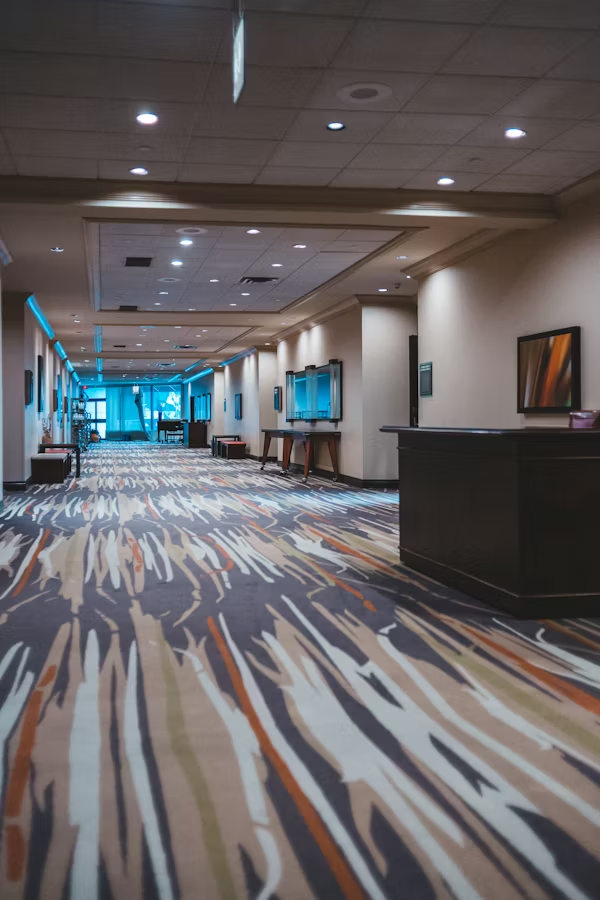
Alt Text: Hotel lobby featuring noise-reducing carpet tiles and reception desk.
What works better in healthcare spaces?
In healthcare interiors, vinyl flooring is often the stronger choice in many patient-facing and high-use areas.
Reception spaces, hallways, check-in zones, and treatment-related areas often need surfaces that can continue performing under repeated use and regular cleaning. In these spaces, vinyl usually provides a better fit.
Carpet tile may still work in selected office-style or administrative spaces within a healthcare property. Private offices or quieter support areas may benefit from a softer surface if comfort and sound control matter more there.
Which material is easier to maintain?
Vinyl flooring is usually easier to maintain in many commercial settings.
That is one of the main reasons it is used so often in corridors, reception areas, and other higher-traffic spaces. A harder surface is often the more practical option where regular cleaning and visible wear are bigger concerns.
Carpet tile can still be manageable, but it usually makes the most sense in areas where comfort and acoustics justify using a softer material. It should be selected intentionally, not automatically. So if the main priority is simpler upkeep, vinyl often has the advantage.
Which material helps more with noise control?
Carpet tile is usually the better option for noise control. In work environments, this can make a real difference. A quieter workspace often feels more comfortable and more functional, especially in meeting rooms, shared offices, and open-plan interiors.
Vinyl flooring does not usually offer the same acoustic benefit. That does not make it the wrong choice. It simply means that where sound control matters, carpet tile often has the stronger advantage.
This is one reason many commercial spaces use carpet tile in work-focused areas and vinyl in movement-focused areas.
Which material gives a better first impression?
That depends on the kind of impression the business wants to create. Carpet tile often gives a softer, more comfortable, more interior-focused impression. It can make office and meeting areas feel more finished and more welcoming.
Vinyl flooring often creates a cleaner, sharper, and more structured impression. That can work well in reception spaces, customer-facing areas, and commercial interiors that want a stronger hard-surface finish.
The better first impression comes from matching the material to the type of space and the image the business wants the property to project.
Is it better to choose one or combine both?
In many commercial properties, combining both is the best solution.
A reception area may need vinyl because of traffic and maintenance. Workspaces may feel better with carpet tile because of comfort and acoustics. Hallways may need one material, while meeting rooms may need another.
Using both materials allows the flooring plan to follow the actual demands of the property. This usually creates a stronger result than forcing one material across every area.
What do business owners often miss when comparing carpet tile and vinyl?
One of the most common mistakes is comparing the materials in general instead of comparing them by room use.
Business owners may ask which option is better overall, but that question is often too broad to be useful. The better question is which one is better for the reception area, for the workspaces, for the hallways, or for the patient-facing spaces.
Another thing people often miss is long-term fit. A material may look like the easier choice at first, but if it does not match how the area functions, it may become harder to manage later. The strongest comparison is always tied to the actual property.
Why do many commercial spaces in Arlington, VA use both?
Commercial spaces in Arlington, VA often need flooring that supports both performance and presentation. Offices, clinics, education interiors, and other commercial properties usually contain areas with different priorities.
That is why using both materials often makes sense. Carpet tile may improve comfort and acoustics in work-focused areas. Vinyl may support durability and easier upkeep in higher-use zones. Together, they can create a flooring plan that works better across the full property.
A better result usually comes from understanding the layout and matching the right material to the right part of the space.
What is the best next step if you are comparing carpet tile and vinyl?
The best next step is to review the property and compare the materials based on how each area is actually used.
That makes it easier to decide whether one material should be used throughout the project or whether a mixed-material layout would create a stronger result. Instead of choosing too early, the decision can be based on the needs of the space itself.
That usually leads to a flooring plan that performs better and makes more sense long term.
Ready to compare carpet tile and vinyl for your commercial space?
If you are deciding between carpet tile and vinyl flooring, APS Flooring & Carpet can help review the property, compare the options by room use, and build the right flooring plan around the actual needs of your commercial space.
Talk to our team to compare carpet tile and vinyl flooring based on how your space is used.
Frequently Asked Questions
Is carpet tile or vinyl better for commercial offices?
Both can work well. Carpet tile is often stronger in workspaces where comfort and acoustics matter, while vinyl is often better in hallways and reception areas.
Which material is easier to maintain?
Vinyl flooring is usually easier to maintain in many higher-traffic commercial spaces.
Does carpet tile help reduce office noise?
Yes. Carpet tile is often used in offices because it helps improve acoustics and reduce sound.
Is vinyl better for healthcare spaces?
In many healthcare areas, vinyl is often the more practical choice because it supports durability and simpler upkeep.
Can one commercial property use both carpet tile and vinyl?
Yes. Many commercial properties use both materials in different areas based on how those spaces function.
Which one works better in reception areas?
That depends on traffic, upkeep, and the kind of finish the business wants. Some reception areas work well with vinyl, while others may use carpet tile depending on the environment.
Does layout affect whether carpet tile or vinyl should be used?
Yes. Layout and room function often play a major role in deciding which material makes more sense.
When does it make the most sense to combine both?
It often makes sense to combine both when the property has mixed needs, such as workspaces that benefit from carpet tile and high-traffic areas that benefit from vinyl.
